A domain is the address used to open a website. Hosting is the server space that stores its files, database and system. The domain helps people find the website; hosting makes its content available when they open the address.
They serve different purposes but are usually needed together. You can buy them from one company or separate providers, provided DNS connects the domain to the correct hosting server.
Domain, hosting and website: a quick comparison
| Component | Simple meaning | Example | Usual payment |
|---|---|---|---|
| Domain | Website address | namabisnes.com | Renewed annually |
| Hosting | Server space and resources that run a website | Storage for files, images, databases and email | Monthly or annually |
| Website | Content and systems visitors use | Service pages, blogs, catalogues or online stores | Development and maintenance according to scope |
A house analogy helps: the domain is the address, hosting is the site and building space, and the website is the structure and content inside. The analogy does not explain every technical detail, but shows the basic relationship.
What is a domain?
A domain is a unique name users type or select to open a website, such as alfatihstudio.com. It replaces the need to remember a server’s numeric or technical IP address. ICANN explains that the Domain Name System, or DNS, connects recognisable names with the relevant internet addresses.
A domain can have several parts:
- Domain name: the identifying part, such as alfatihstudio.
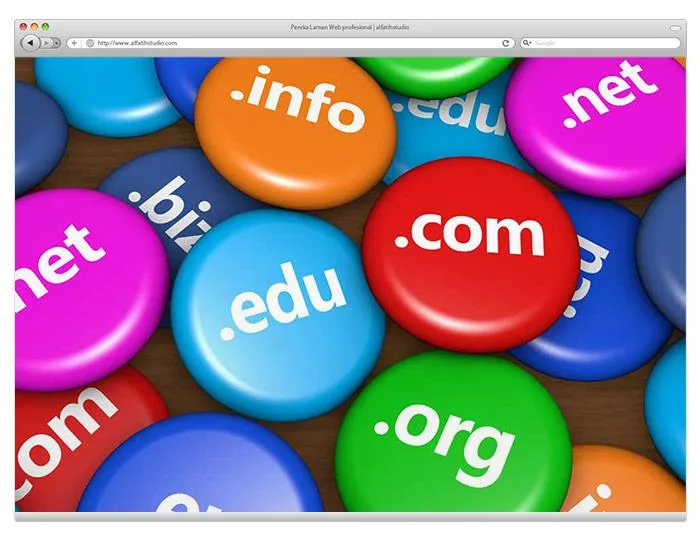
- Extension: a suffix such as .com, .my or .com.my.
- Subdomain: an additional part, such as blog.namabisnes.com or portal.namabisnes.com.
### A domain is not purchased forever Registration grants the right to use a domain for a defined period, commonly one or several years. Renew before expiry. Missed renewal can disrupt the website and email, and the name may eventually become available to someone else.
### Choosing .com, .my or .com.my Choose according to organisational identity, audience, registration requirements and name availability. .com is widely recognised, .my highlights a Malaysian identity, and .com.my is commonly used by businesses meeting the relevant requirements.
Registrar policies can change. Check current requirements with the registrar or official MYNIC registration policies. Do not assume an extension guarantees Google rankings. A name that is easy to type, fits the brand and inspires customer confidence is usually more useful.
What does hosting mean?
Hosting provides space, internet connectivity and server resources to store, run and make a website accessible online. In Bahasa Melayu, it is often described as pengehosan web or website storage, but it does more than ordinary storage.
Hosting can include:
- Space for website files, images and documents.
- Databases for content, users, orders or settings.
- Processing, memory and server usage allowances.
- Bandwidth or data transfer to visitors.
- SSL/HTTPS, backups, security and monitoring.
- Domain-based email accounts, where provided.
- Technical assistance according to the service purchased.
Equal storage allowances do not guarantee equal performance or support. Evaluate server speed, CPU and memory limits, data centre location, backups, security and the support team’s problem-solving capability.
How do domains and hosting work together?
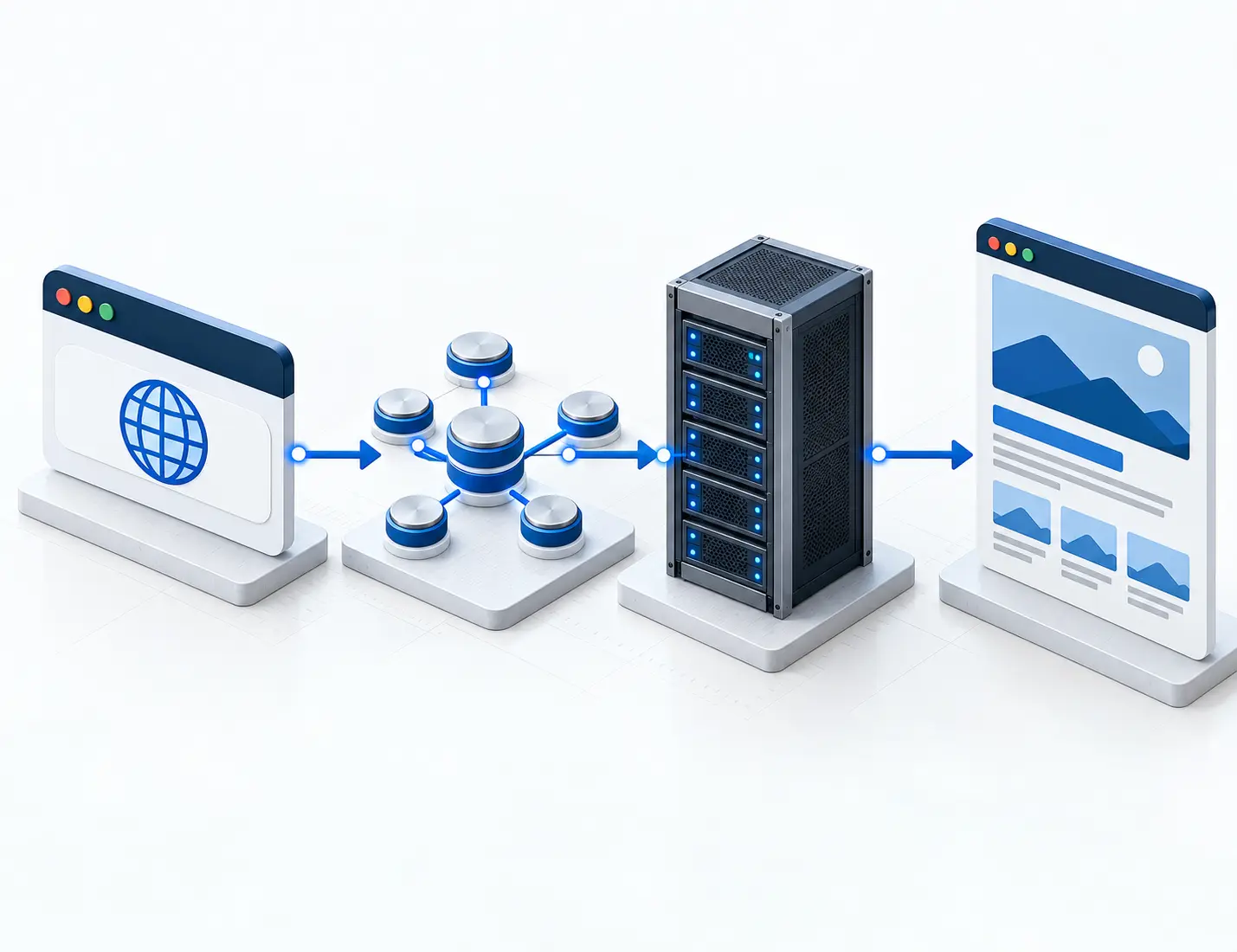
- A user enters or selects a domain in a browser.
- DNS finds records identifying its server.
- The browser contacts the hosting server.
- The server processes the request and returns website files or data.
- The page appears on the phone or computer.
Domains usually connect through nameservers or DNS records such as A, AAAA and CNAME. After changes, DNS caches may keep some users on the old destination temporarily. This is not necessarily exactly 24 or 48 hours: it depends on records, TTL values, resolvers and user networks.
Can they be bought separately?
Yes. Register a domain with one company and host with another. This offers flexibility, but keep registrar, DNS, hosting and email access secure and available.
You can register a suitable domain before building the website. A domain alone does not display a complete website without hosting or another content platform. Servers can be tested through temporary addresses, while a domain provides a convenient public address.
Is a domain the same as business email?
No. A domain allows an address such as [email protected], but email service still needs to be provided and configured. It may be included in hosting, sold separately or managed by a specialist email provider.
Before moving domains or hosting, check where email is stored and which DNS records it uses. Ignoring MX, SPF, DKIM or DMARC records can disrupt sending or receiving email.
Common hosting types
| Type | General features | Usually suitable for |
|---|---|---|
| Shared hosting | Several customers share server resources | Small websites, company profiles and moderate blogs |
| Managed WordPress | A WordPress-focused environment and assistance | Organisations wanting less routine technical work |
| VPS | More controlled virtual resources requiring technical management | Special requirements or higher usage |
| Cloud hosting | Resources distributed through cloud infrastructure | Applications needing flexibility and scale |
| Dedicated server | A server for one customer or organisation | Large systems with particular performance, control or compliance needs |
Category names alone do not guarantee quality. Check specifications and responsibility for configuration, updates, security, backups and recovery. For WordPress, also review its published server requirements.
What do domains and hosting cost annually?
Costs depend on the extension, server capacity, traffic, email, backups, licences and support level. First-year promotions can differ from renewal prices.
alfatihstudio domains start at RM80 per year, while hosting and support start at RM200 per year. Actual prices depend on the website type, capacity, email, traffic and technical assistance required.
| Item | What to confirm |
|---|---|
| Domain | Registration and renewal prices, privacy protection and transfer fees |
| Hosting | Storage, bandwidth, CPU/memory, databases, server location and usage limits |
| SSL/HTTPS | Whether the certificate and renewal are included |
| Account count, capacity, spam filtering and migration support | |
| Backups | Frequency, retention, copy location and restore charges |
| Support | Scope, response times and additional work |
| Licences | Themes, plugins, security systems and third-party services |
For a simple single-page business website, the current Website Express package includes a .com domain and first-year hosting. For a CMS, multiple pages or growing content, compare corporate website packages. Original service links are retained below.
Choosing a domain name
- Choose a name close to your brand or organisation.
- Prefer spelling that is easy to say, type and remember.
- Avoid unnecessary hyphens, numbers or confusing abbreviations.
- Check possible conflicts with other brands or trademarks.
- Check that the resulting email address looks suitable and is not too long.
- Register with the real owner’s details and an email address that remains accessible.
Choosing business hosting
- Match the platform: static sites, WordPress, WooCommerce and custom systems have different requirements.
- Assess performance rather than storage alone; check processing resources and limits.
- Check backup frequency, retention and whether recovery has been tested.
- Understand support: server help does not necessarily include fixing WordPress, plugins or content.
- Plan growth and check whether upgrades require difficult migration.
- Review HTTPS, account isolation, server updates and monitoring.
For WordPress, hosting is only one layer. WordPress, themes and plugins still need updates, monitoring and backups. The linked Maintenance, Care & Grow service supports management after launch.
Register the domain under the right name
A domain is an important business asset. Even if a developer or agency registers it, know the registrant, renewal email, registrar and access process. Avoid relying solely on a former employee’s personal account or an unreachable provider.
Keep records of the registrar and renewal date; domain, DNS and hosting access; key website and email DNS records; backup locations and recovery procedures; and the person responsible for renewals.
Common purchasing mistakes
- Comparing promotions without renewal prices.
- Registering under someone else’s name or email without clear ownership records.
- Assuming ‘unlimited’ means no resource or usage-policy limits.
- Assuming all hosting includes free backup and recovery.
- Not checking platform requirements.
- Moving hosting without planning email and DNS migration.
- Failing to retain access after completion.
If the website will not open, email fails or domain access is lost, do not change DNS randomly. Record the error and request a Website Repair assessment before important records or data are altered.
Before paying: a checklist
- The domain is available and suits the brand.
- First-year and renewal prices are explained.
- Ownership and access holders are identified.
- Hosting supports the intended platform.
- Storage, traffic, email and server limits are known.
- Backup, security, migration and support are explained.
- SSL/HTTPS and additional licences are clear.
Conclusion
A domain is the address; hosting stores and runs the website. DNS connects them. Look beyond starting prices to renewal, ownership, backups, email, security and support after launch.
If you are unsure about the website type, hosting capacity or domain, first describe the site’s purpose and required features. The linked website brief guide can help alfatihstudio provide a more accurate recommendation and quotation.
Frequently asked questions
Hosting, or pengehosan web, provides server space and resources to store and run a website so it is accessible through the internet.
A domain is the unique name or address used to open a website, such as namabisnes.com. It directs users to the correct server without requiring them to remember its IP address.
The domain is the website address. Hosting provides server space and resources to store files and run the website. DNS points the domain towards hosting.
A public website usually needs a hosting service or platform to run its content and a domain for a convenient address. A domain alone does not provide a complete website.
Yes. Connect them with the correct nameservers or DNS records and retain access to both accounts.
Costs depend on the extension, capacity, email, traffic, backups and support. alfatihstudio domains start from RM80 per year and hosting with support from RM200 per year.
Not necessarily. It allows branded email addresses, but email service must be provided through hosting or a separate provider.
The website and email may stop working. Hosting data may be deleted after a period, and an unrenewed domain may eventually be registered by someone else. Exact terms depend on the provider.
Further reading and services
https://www.icann.org/resources/pages/about-domain-names-2018-08-30-en
https://mynic.my/storage/pdf/MYNIC_Registrant_Policy.pdf
https://wordpress.org/about/requirements/
https://alfatihstudio.com/pakej-website-ekspress/
https://alfatihstudio.com/pakej-website/
https://alfatihstudio.com/pakej-care-growth/