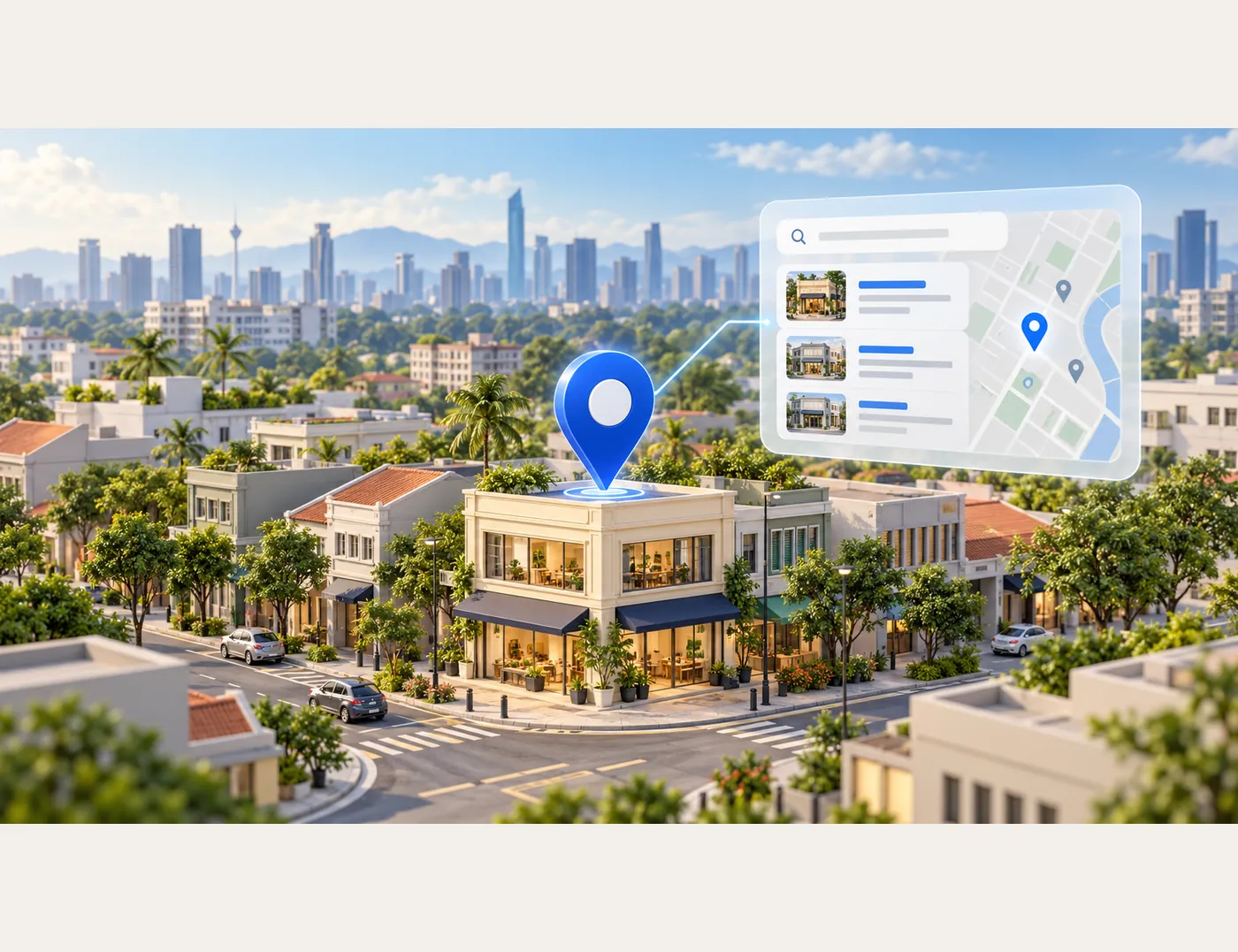
Local SEO helps a business become discoverable in location-related searches, including Google Search and Google Maps. For Malaysian businesses, the foundations include an eligible and accurate Google Business Profile, a website describing real services and locations, genuine customer reviews and easy ways to get in touch.
The aim is more than appearing for a town name. A more useful goal is helping nearby people understand what you offer, whether you cover their area and how to contact or visit you. No method guarantees first place for every search.
How does local SEO differ from general SEO?
General SEO can target topics without a location requirement, such as “what is hosting”. Local SEO focuses on local intent, such as “cake shop in Bangsar” or “plumber near me”. Results may include website pages, business profiles and maps, depending on the search.
Businesses with customer-facing premises or those visiting customers in particular areas may benefit from a local approach. However, an online-only business is not necessarily eligible for a Google Business Profile. Check Google’s eligibility and business representation guidelines before creating a profile; do not use a false address to appear closer to customers.
How does Google determine local search results?
Google describes three main factors: relevance, distance and prominence. Relevance concerns how well a business matches a search, distance concerns the user’s location, and prominence includes signals such as links and reviews. Complete information helps Google understand a business but does not remove the effect of distance.
This summary refers to Google’s official local ranking guidance. Google also explains that you cannot request or pay for better organic local rankings. Advertising and organic rankings are different.
A local SEO checklist for Malaysian businesses
1. Complete an eligible Google Business Profile
Use the real business name, an appropriate category, an active telephone number, opening hours and a website link. Verify the profile through Google’s process. Premises receiving customers need an accurate location; businesses visiting customers should follow service-area business rules and hide the address if customers are not served there.
2. Keep important details consistent and current
Check the name, address, telephone number and opening hours on the website and business profile. Add special holiday hours where needed. Consistency helps customers avoid conflicting information; it is not an automatic ranking formula. For area-based services, state the actual locations covered.
3. Build useful service and location pages
Content targeting local SEO in Kuala Lumpur should address businesses genuinely operating in or covering that area. Explain the service, process, enquiry method, location or coverage and practical information such as access to the premises. Do not create many identical city pages that only change the location name.
If there are several genuine branches, each page can give that branch’s address, hours, telephone number and services. With a single operating area, a clear service page may be more useful than dozens of thin location pages. See also how a website can help local customers.
4. Gather genuine reviews without incentives
Ask real customers to share their experiences honestly. Under Google Maps’ content policies, do not buy reviews, offer gifts in exchange or only ask customers expected to give five stars. Respond professionally to negative reviews too, without exposing customer personal information.
5. Use genuine photographs and operational evidence
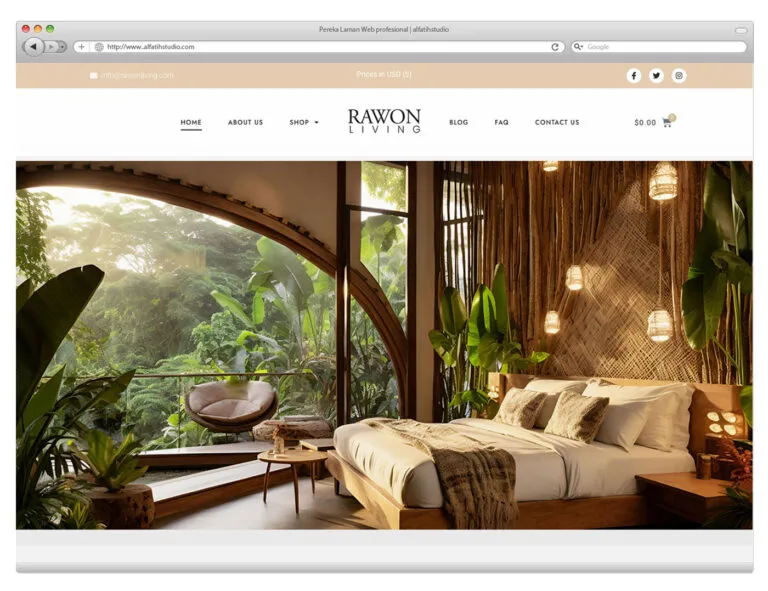
Photographs of premises, teams, completed work and facilities help people understand the business. Obtain permission when customers appear in images. Do not present AI illustrations as evidence of real branches or projects; this article’s visual is a concept illustration rather than customer premises.
6. Make taking action easy on a phone
Visitors should easily find services, telephone details, the location and enquiry methods. Check directions, WhatsApp links and forms. A website can receive views yet lose enquiries if contacting the business is difficult. Use the user-friendly website checklist for basic checks.
What should you measure besides rankings?
| Data | What it helps you understand |
|---|---|
| Search Console | Queries, impressions, clicks and website pages receiving search traffic. |
| Business Profile performance | Available interactions such as website clicks, calls or direction requests. |
| Actual enquiries | Requested services, customer areas, lead suitability and known sources. |
| Sales or bookings | How many enquiries lead to business results, alongside traffic. |
A telephone button click does not prove a call was answered, and a WhatsApp click does not prove a message was sent. Record actual enquiries and their sources when known. Compare equivalent periods and consider seasons, holidays and operational changes before attributing an improvement to one SEO action.
Start with accurate information, then improve
First correct business profiles and contact information, update main service pages and test customer actions. Use search data and customer questions to decide what content comes next. Schema matching genuine information can help machines understand a page, but does not guarantee rankings or inclusion in AI answers.
If your website exists but content and monitoring are not progressing, explore alfatihstudio Maintenance, Care & Growth. Packages cover technical maintenance and content according to the plan; Google Business Profile management and additional tasks require separate confirmation rather than being assumed included.
Frequently asked questions
Local SEO helps a business become discoverable in location-related searches through accurate business information, an eligible profile and a website addressing local customer needs.
No. Eligibility depends on the operation and its customer interactions. An online-only business is not necessarily eligible; check Google’s official guidance before creating a profile.
No. Local results depend on relevance, distance, prominence and the user’s search circumstances. First place cannot be guaranteed for every location or search.
Not necessarily. Create pages when branches, services or local information are meaningfully different and useful. Avoid repetitive pages that only change the town name.
Combine Search Console data, Business Profile performance and actual enquiry and sales records. Telephone or WhatsApp button clicks alone do not prove calls, messages or sales occurred.